Welcome to a New AI Discourse
We’ve spent the last century thinking like machines — but humans are complex adaptive systems, and the old models can’t hold us.
The machine metaphor didn’t start in the last century — it began 400 years ago with Descartes. But the 20th century is where it hardened into the way we live, work, learn, and solve problems.
We’re realizing this at the exact moment technologists insist machines will surpass us — which makes the blind spot impossible to ignore.
This is where we enter the room: two unlikely founders naming AI's blind spot — "nurturability" — and the human capacity that answers it: complexity intelligence.
People keep asking whether AI will replace us. The deeper question is this: what if AI is the thing that finally lets us step out of the machine metaphor we’ve been trapped in — the one that taught us to think in fragments? What if the technology built to flatten us becomes how we get whole?
Which brings us to the moment we’re in — and why this discourse matters now.

We started long before we knew what we were starting.
Two whole people. One body of work.
Why Now...
Technologists have mastered technical problem‑solving. But they’ve done so inside a survival‑of‑the-fittest worldview — and they’ve left out something essential: how whole systems survive.
Most writing about AI focuses on machine intelligence, AGI, and alignment. We bring forward the missing half: the human capacities earned through lived chaos — emotional depth, relational pattern recognition, cultural navigation, whole-system awareness, resilience shaped by scars, suffering, and breakthroughs, nonlinear human development — and the science of complex adaptive systems.
This is the intelligence AI does not have.
Our argument is simple: this must be explicitly integrated into the future of AI — where math evolves into the geometry of human thinking.
We didn't just propose an idea. We built it — and put it in front of 45,000 people, across fifty different applications: therapy practices, management teams, classrooms, Army bases. All of it before AI could meet the work. Now it can.
This is a discourse about a new path for AI — as a wingman, not a replacement. And a new way for humans to understand complexity itself.
How This Leg of the Journey Began
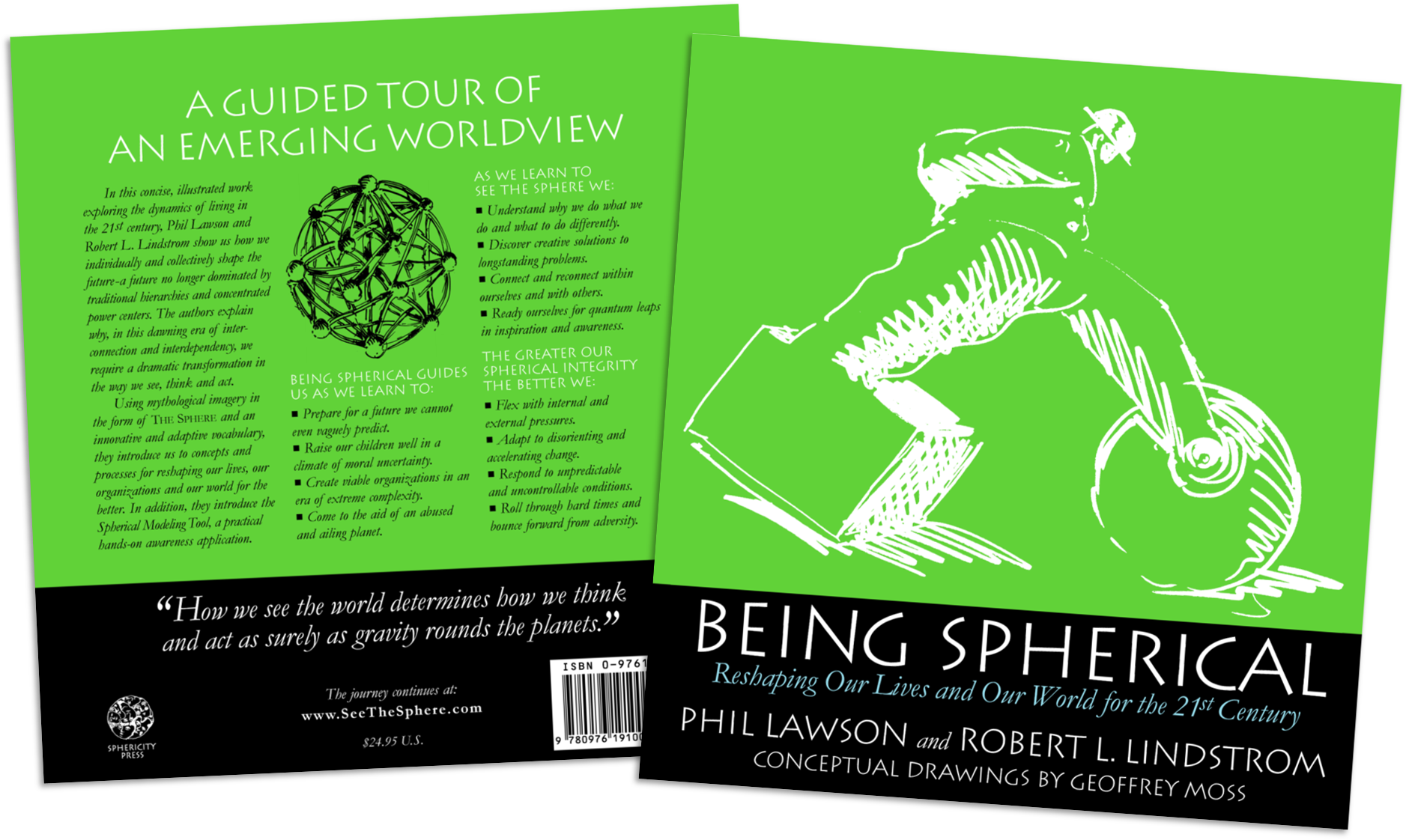
The work first began with the two of us connecting the dots of our own lives. But it took its name, The Sphere, through Phil's five-year collaboration with award-winning writer Robert L. Lindstrom, and it has continued and deepened in the decades since.
Phil and Rob's enthusiasm for the book-writing project surfaced in 1993, in Los Angeles, CA, when their business lives overlapped. By 1998, Phil was already sketching in the framework, and the two committed wholly to the project in 1999, publishing in 2004 after significant historic and scientific research.
The View From Here
This website offers a distilled, pitch-deck view of our larger body of work — and the two books below carry the deeper narrative.
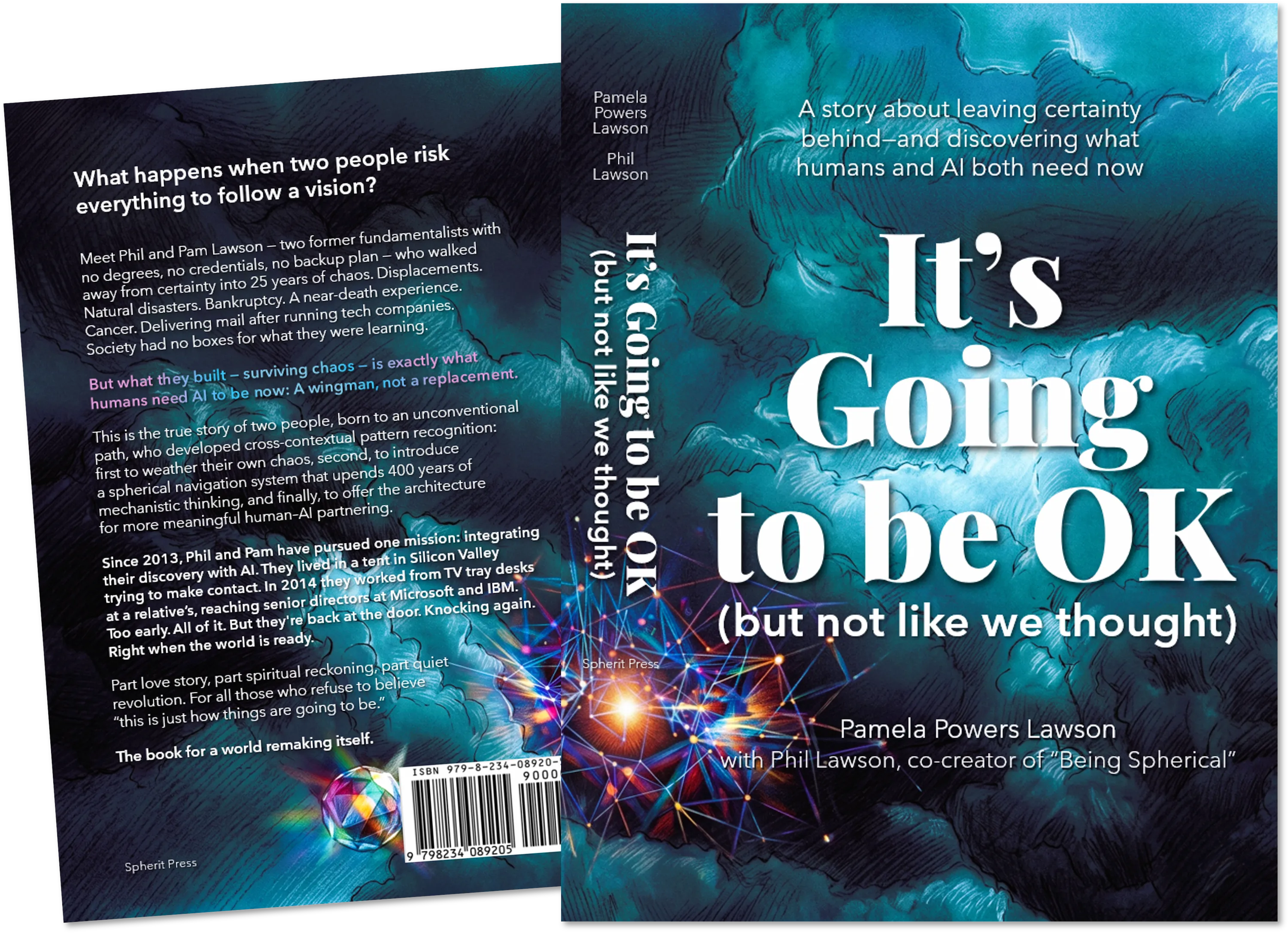
Behind the work is the full arc of how an idea became a system: first articulated in a book, proven through decades of practice in the field, patented for its novelty, refined with every application, and chronicled in our memoir.
This site shows what that system makes possible — a way of addressing the AI challenges emerging across the industry. We're not selling an algorithm. We're offering the human-complexity layer that supports multiple needs across multiple uses.
If the work resonates, we welcome a deeper conversation about next steps after you've explored the site.
It's Going to be OK (but not like we thought) (2011; expanded 2026) by Pamela Powers Lawson, with Phil Lawson